Buy homesecuritysystems.eu ?
We are moving the project
homesecuritysystems.eu .
Are you interested in purchasing the domain
homesecuritysystems.eu ?
domain@kv-gmbh.de · 0541-91531010
Buy homesecuritysystems.eu ?
What are peptide bonds?
Peptide bonds are covalent bonds that link amino acids together in a protein chain. They are formed through a condensation reaction between the carboxyl group of one amino acid and the amino group of another amino acid, resulting in the release of a water molecule. Peptide bonds are crucial for maintaining the structure and function of proteins, as they determine the sequence of amino acids in a protein chain. **
What is correct: peptide bond?
A peptide bond is a covalent bond that forms between the carboxyl group of one amino acid and the amino group of another amino acid during protein synthesis. This bond is formed through a condensation reaction, where a molecule of water is removed. The resulting bond is a strong and stable linkage that holds the amino acids together in a protein chain. Therefore, the correct term is "peptide bond" to describe this specific type of covalent bond between amino acids. **


Similar search terms for Peptide
Top-Angebote
Products related to Peptide:
-
Inspire Curations A9 Mini WiFi Security Camera Wireless Smart Surveillance Cam With Night Vision & Motion Detection A9 Mini WiFi Security Camera Wireless Smart Surveillance Cam With Night Vision & Motion DetectionKeep an eye on what matters most with this compact mini WiFi security camera designed for smart home monitoring. Despite its small size, the A9 camera delivers clear HD video and realtime viewing through your smartphone, allowing you to monitor your...70,50 $*Shipping: 0,00 $Secure redirect to the provider
-
Uplift Essentials Smart WiFi Garage Door Controller Remote Access & Security Alarm Hub Smart WiFi Garage Door Controller Remote Access & Security Alarm HubUpgrade your home with the ultimate convenience of a smart garage door opener that puts complete control in the palm of your hand. This intelligent controller transforms your existing garage motor into a hightech security asset, allowing you to...84,97 $*Shipping: 0,00 $Secure redirect to the provider
-
Inspire Select Mini 1080P Wireless Security Camera With Night Vision Portable Surveillance Cam, Motion Detection Home & Travel Monito Mini 1080P Wireless Security Camera With Night Vision Portable Surveillance Cam, Motion Detection Home & Travel MonitoFeel safer knowing you can check what mattersanytime, anywhere. This compact surveillance device is built for clear 1080P monitoring with night vision support, giving you reliable visibility even in low light. Designed for home security, travel, and...44,98 $*Shipping: 0,00 $Secure redirect to the provider
-
Inspire Curations Mini Wireless Smart Security Camera Night Vision Motion Detection CCTV With Remote App Monitoring Mini Wireless Smart Security Camera Night Vision Motion Detection CCTV With Remote App MonitoringKeep your home or workspace secure with this compact wireless smart security camera designed for discreet and reliable surveillance. Despite its small size, the camera delivers clear HD video and realtime monitoring through your smartphone. With...70,50 $*Shipping: 0,00 $Secure redirect to the provider


-
What is a peptide bond, peptide chain, peptide group, di-, tri-, and polypeptide? Can you please explain this briefly and simply? Thank you.
A peptide bond is a chemical bond that forms between the carboxyl group of one amino acid and the amino group of another amino acid. When multiple amino acids are linked together by peptide bonds, they form a peptide chain. A peptide group refers to a group of amino acids linked together by peptide bonds. A dipeptide is a chain of two amino acids, a tripeptide has three amino acids, and a polypeptide is a chain of many amino acids linked together. These chains of amino acids are the building blocks of proteins. **
-
What is the stability of peptide bonds?
Peptide bonds are relatively stable under normal physiological conditions. They are formed through a condensation reaction between the carboxyl group of one amino acid and the amino group of another, resulting in the release of a water molecule. This covalent bond is strong and resistant to hydrolysis, making it stable in the presence of water. However, under extreme conditions such as high temperature or strong acids or bases, peptide bonds can be hydrolyzed, leading to the breakdown of the peptide chain. **
-
How does hydrolysis occur during peptide cleavage?
Hydrolysis occurs during peptide cleavage when a water molecule is used to break the bond between the carboxyl group of one amino acid and the amino group of another. This process involves the addition of a water molecule to the peptide bond, resulting in the separation of the two amino acids. The water molecule donates a hydrogen ion to one amino acid and a hydroxide ion to the other, causing the bond to break and the peptide to be cleaved. This hydrolysis reaction is catalyzed by enzymes called proteases, which facilitate the cleavage of peptides in biological systems. **
-
Why are peptide bonds not freely rotatable?
Peptide bonds are not freely rotatable because of the partial double bond character that arises from resonance in the peptide bond. This restricts the rotation around the bond and locks the peptide backbone into a planar structure. The resonance forms a rigid, flat structure that allows for the formation of the alpha helix and beta sheet secondary structures in proteins. This rigidity is essential for maintaining the specific three-dimensional shape and function of proteins. **

How does one go from DNA to peptide?
The process of going from DNA to peptide involves several steps. First, the DNA sequence is transcribed into messenger RNA (mRNA) by the enzyme RNA polymerase. The mRNA is then translated by ribosomes, which read the mRNA sequence in groups of three nucleotides called codons. Each codon corresponds to a specific amino acid, which is the building block of a peptide. As the ribosome reads the mRNA, it links together the corresponding amino acids to form a peptide chain. This chain of amino acids folds into a specific three-dimensional structure to form a functional peptide. **
How can one recognize mesomerically stabilized peptide bonds?
Mesomerically stabilized peptide bonds can be recognized by the presence of resonance structures in the peptide bond. This is typically observed when the peptide bond is part of a conjugated system, such as in the case of proline or in the presence of aromatic amino acids like phenylalanine or tyrosine. The presence of resonance structures indicates that the electrons in the peptide bond are delocalized, leading to increased stability. Additionally, mesomerically stabilized peptide bonds may exhibit altered reactivity compared to non-stabilized peptide bonds, making them important in the study of protein structure and function. **
Top-Angebote
Products related to Peptide:
-
Inspired Finds X5 Mini WiFi Security Camera 1080P Night Vision Motion Detection Portable Surveillance Cam X5 Mini WiFi Security Camera 1080P Night Vision Motion Detection Portable Surveillance CamKeep an eye on what matters most with this compact mini WiFi camera designed for discreet, reliable monitoring anytime, anywhere. Built for modern security needs, this 1080P security camera delivers clear, detailed footage whether you are at home or...34,99 $*Shipping: 0,00 $Secure redirect to the provider
-
Uplift Essentials 4K Mini Security Camera Full Color Night Vision, Waterproof WiFi Surveillance With Motion Detection 4K Mini Security Camera Full Color Night Vision, Waterproof WiFi Surveillance With Motion DetectionEnhance your security with the 4K Mini Security Camera, designed to deliver crystalclear footage around the clock. Featuring 4K HD resolution, this compact camera captures every detail with remarkable clarity. Its fullcolor night vision ensures...47,45 $*Shipping: 0,00 $Secure redirect to the provider
-
Inspire Curations A9 Mini WiFi Security Camera Wireless Smart Surveillance Cam With Night Vision & Motion Detection A9 Mini WiFi Security Camera Wireless Smart Surveillance Cam With Night Vision & Motion DetectionKeep an eye on what matters most with this compact mini WiFi security camera designed for smart home monitoring. Despite its small size, the A9 camera delivers clear HD video and realtime viewing through your smartphone, allowing you to monitor your...70,50 $*Shipping: 0,00 $Secure redirect to the provider
-
Uplift Essentials Smart WiFi Garage Door Controller Remote Access & Security Alarm Hub Smart WiFi Garage Door Controller Remote Access & Security Alarm HubUpgrade your home with the ultimate convenience of a smart garage door opener that puts complete control in the palm of your hand. This intelligent controller transforms your existing garage motor into a hightech security asset, allowing you to...84,97 $*Shipping: 0,00 $Secure redirect to the provider
-
What are peptide bonds?
Peptide bonds are covalent bonds that link amino acids together in a protein chain. They are formed through a condensation reaction between the carboxyl group of one amino acid and the amino group of another amino acid, resulting in the release of a water molecule. Peptide bonds are crucial for maintaining the structure and function of proteins, as they determine the sequence of amino acids in a protein chain. **
-
What is correct: peptide bond?
A peptide bond is a covalent bond that forms between the carboxyl group of one amino acid and the amino group of another amino acid during protein synthesis. This bond is formed through a condensation reaction, where a molecule of water is removed. The resulting bond is a strong and stable linkage that holds the amino acids together in a protein chain. Therefore, the correct term is "peptide bond" to describe this specific type of covalent bond between amino acids. **
-
What is a peptide bond, peptide chain, peptide group, di-, tri-, and polypeptide? Can you please explain this briefly and simply? Thank you.
A peptide bond is a chemical bond that forms between the carboxyl group of one amino acid and the amino group of another amino acid. When multiple amino acids are linked together by peptide bonds, they form a peptide chain. A peptide group refers to a group of amino acids linked together by peptide bonds. A dipeptide is a chain of two amino acids, a tripeptide has three amino acids, and a polypeptide is a chain of many amino acids linked together. These chains of amino acids are the building blocks of proteins. **
-
What is the stability of peptide bonds?
Peptide bonds are relatively stable under normal physiological conditions. They are formed through a condensation reaction between the carboxyl group of one amino acid and the amino group of another, resulting in the release of a water molecule. This covalent bond is strong and resistant to hydrolysis, making it stable in the presence of water. However, under extreme conditions such as high temperature or strong acids or bases, peptide bonds can be hydrolyzed, leading to the breakdown of the peptide chain. **
Similar search terms for Peptide
-
Inspire Select Mini 1080P Wireless Security Camera With Night Vision Portable Surveillance Cam, Motion Detection Home & Travel Monito Mini 1080P Wireless Security Camera With Night Vision Portable Surveillance Cam, Motion Detection Home & Travel MonitoFeel safer knowing you can check what mattersanytime, anywhere. This compact surveillance device is built for clear 1080P monitoring with night vision support, giving you reliable visibility even in low light. Designed for home security, travel, and...44,98 $*Shipping: 0,00 $Secure redirect to the provider
-
Inspire Curations Mini Wireless Smart Security Camera Night Vision Motion Detection CCTV With Remote App Monitoring Mini Wireless Smart Security Camera Night Vision Motion Detection CCTV With Remote App MonitoringKeep your home or workspace secure with this compact wireless smart security camera designed for discreet and reliable surveillance. Despite its small size, the camera delivers clear HD video and realtime monitoring through your smartphone. With...70,50 $*Shipping: 0,00 $Secure redirect to the provider
-
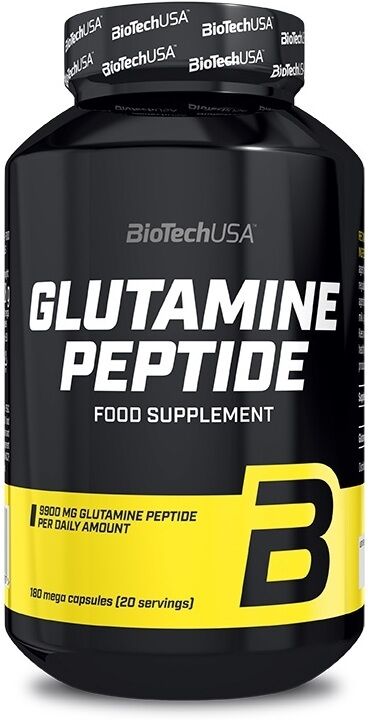
BiotechUSA Glutamine Peptide 180 capsulesNutrition and Supplements Amino acids BiotechUSA Glutamine Peptide 180 capsules Glutamine is a conditionally essential amino acid that can be produced by the body itself. However, glutamine supplementation may be necessary in certain circumstances, such as high intensity or long term workouts. Such activities may cause the body to require more glutamine than it can produce. Glutamine peptide, like any BioTechUSA product, is safe and contains carefully selected ingredients.17,33 £*Shipping: 3,99 £Secure redirect to the provider
-
Mizon Peptide Ampoule Cream 50mLA skin-care product for wrinkles and signs of ageing. It a light cream containing 45% peptide, a strong defense against aging. Increases skin renewal, helps reduce fine lines, firms, hydrates, promotes collagen and elastin production, and is anti-inflammatory. Apply an appropriate amount to the skin with gentle movements or massages as the last step of morning and/or evening care.14,45 £*Shipping: 5,22 £Secure redirect to the provider
-
How does hydrolysis occur during peptide cleavage?
Hydrolysis occurs during peptide cleavage when a water molecule is used to break the bond between the carboxyl group of one amino acid and the amino group of another. This process involves the addition of a water molecule to the peptide bond, resulting in the separation of the two amino acids. The water molecule donates a hydrogen ion to one amino acid and a hydroxide ion to the other, causing the bond to break and the peptide to be cleaved. This hydrolysis reaction is catalyzed by enzymes called proteases, which facilitate the cleavage of peptides in biological systems. **
-
Why are peptide bonds not freely rotatable?
Peptide bonds are not freely rotatable because of the partial double bond character that arises from resonance in the peptide bond. This restricts the rotation around the bond and locks the peptide backbone into a planar structure. The resonance forms a rigid, flat structure that allows for the formation of the alpha helix and beta sheet secondary structures in proteins. This rigidity is essential for maintaining the specific three-dimensional shape and function of proteins. **
-
How does one go from DNA to peptide?
The process of going from DNA to peptide involves several steps. First, the DNA sequence is transcribed into messenger RNA (mRNA) by the enzyme RNA polymerase. The mRNA is then translated by ribosomes, which read the mRNA sequence in groups of three nucleotides called codons. Each codon corresponds to a specific amino acid, which is the building block of a peptide. As the ribosome reads the mRNA, it links together the corresponding amino acids to form a peptide chain. This chain of amino acids folds into a specific three-dimensional structure to form a functional peptide. **
-
How can one recognize mesomerically stabilized peptide bonds?
Mesomerically stabilized peptide bonds can be recognized by the presence of resonance structures in the peptide bond. This is typically observed when the peptide bond is part of a conjugated system, such as in the case of proline or in the presence of aromatic amino acids like phenylalanine or tyrosine. The presence of resonance structures indicates that the electrons in the peptide bond are delocalized, leading to increased stability. Additionally, mesomerically stabilized peptide bonds may exhibit altered reactivity compared to non-stabilized peptide bonds, making them important in the study of protein structure and function. **
* All prices are inclusive of VAT and, if applicable, plus shipping costs. The offer information is based on the details provided by the respective shop and is updated through automated processes. Real-time updates do not occur, so deviations can occur in individual cases. ** Note: Parts of this content were created by AI.